
A Photo Isn't Evidence Until It Can Prove Where and When It Was Taken

Updated: Sep 22

A photo from a field program is only useful as evidence if you can answer three questions: Where was it taken? When was it taken? What record does it support?
A photo sitting in a camera roll or pasted into a report can't reliably answer those questions. In environmental and EHS work, that gap becomes a problem when a client, auditor, or regulator needs to verify a sample, observation, or site condition.
The problem isn't taking the photo. It's the missing context.
Phone cameras capture the image, but the connection between the photo and the field record is often handled separately. A boring-location photo may sit apart from the boring log. A sample photo may have to be matched to a chain of custody record later. And photos taken offline can require someone to reconstruct their context after the fact.
The information exists. It's just not structured.
QNOPY makes the photo part of the field record
With QNOPY, photos are captured directly within the same workflow as sampling, inspections, and field observations.
Automatic GPS and timestamps attach location and time to every photo.
Record-level linking connects the photo to the specific sample, boring, or observation it documents.
Offline capture preserves the complete record even without connectivity and syncs it automatically when the device reconnects.
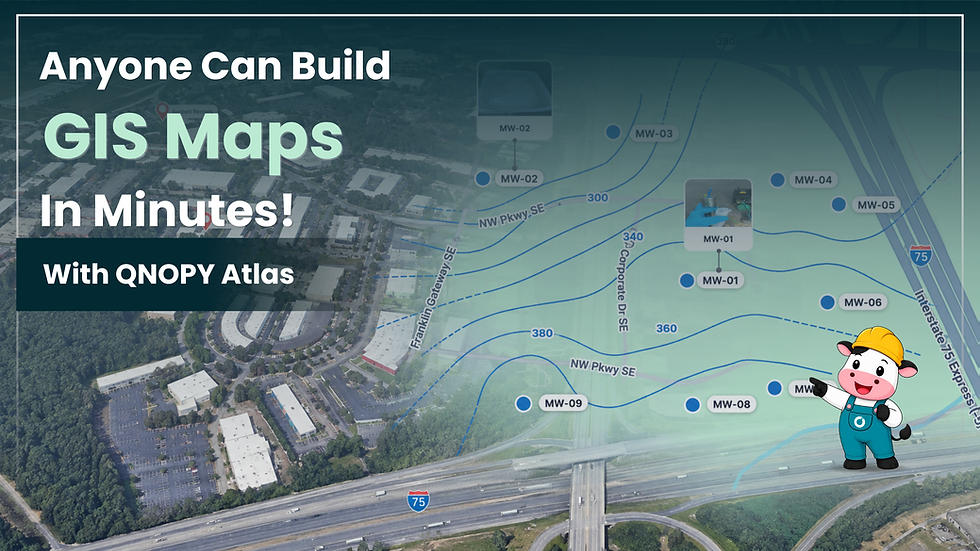
Photo Log geotags images directly to the project map.
Groundwater Monitoring lets technicians capture meter readings alongside photos and field data.
AI Event Summary can use the structured field data, photos, and forms to generate report narratives.
No separate photo app. No manual tagging. No matching files by timestamp later.
Why that matters
When someone needs to verify a photo months later, the answer is already attached to the record.
Chain of custody: Verify where and when a sample was collected without reconstructing the trail.
Phase I ESA: Keep site photos connected to the observations they document, making reporting faster.
EHS inspections: Know exactly which finding a photo supports, even long after the inspection.
The difference is simple: QNOPY doesn't just store the photo. It preserves the context that makes the photo useful.
See what a fully structured photo record looks like. Request a QNOPY demo and see how it fits into your sampling or inspection workflow.


Comments